
Chinese Foreign Minister Qin Gang reiterated that the situation at the India-China border is generally stable and both sides should consolidate the present achievements and strictly abide by the relevant agreements while pushing for further cooling and easing of the conditions for sustainable peace and tranquillity at the frontier.

'The Chinese military cannot advance much in Ladakh, even if they want to.' 'Similarly, in Arunachal Pradesh, they can rename a village or two, intrude here or there, but cannot do much more realistically.'
The US hopes that the differences will be resolved peacefully, officials said in Washington.

The external affairs ministry said the talks were 'positive'.
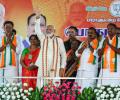
The prime minister should apologise to the 140 crore Indians for deceiving them on national television on June 19th, 2020, with his statement Na Koi Ghusa Hai, Na Hi Koi Ghus Aaya hai

Senior Congress leader Shashi Tharoor has articulated India's position on BRICS, advocating for it to be a "non-West, but not anti-West" platform, a stance he believes is crucial for India's national interest. He highlighted the prestige of hosting the BRICS summit, India's responsibility to represent the Global South, and the significance of bilateral meetings, particularly with China and Russia. Tharoor also addressed the strained India-China relations, citing border issues and trade leverage, and discussed the challenges within BRICS, including difficulties in achieving consensus on global issues and trade imbalances, while also considering the need for diversified international relations amidst unpredictable US sanctions.

The Indian and Chinese militaries held a fresh round of high-level military talks focusing on maintaining peace and security along the Line of Actual Control (LAC) in eastern Ladakh.
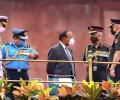
Defence Minister Rajnath Singh is likely to call another high-level meeting later today, they added.

This was the first round of talks for Wang after he succeeded State Councillor Yang Jiechi earlier this year.

"While we're at it, we're talking about China and India are going at it pretty good on the border, as you know. It's been very nasty," Trump told reporters on Friday evening at a White House news conference.

The Nepalese foreign minister was speaking to the media a day after holding wide-ranging talks with his Indian counterpart S Jaishankar that focused on ways to further expand ties in diverse sectors, including trade, critical technology, connectivity and energy.

National Security Advisor Shivshankar Menon arrived in Beijing on Sunday to hold the crucial Special Representatives border talks with China to resolve the long-running boundary dispute between the two countries and lay the ground for Chinese Premier Wen Jiabao's visit to New Delhi in December.

'It beggars belief that Saudi Arabia would deploy military force against India, a top partner and market.'

India and China decided to seek a fair and rational solution to their border dispute on Saturday as they focused on the proposed border defence cooperation agreement to avert incursions like the one witnessed in Leh region last month.

India and China reviewed the situation along the Line of Actual Control (LAC) in eastern Ladakh and prepared for the next Special Representatives' dialogue on the boundary question.

In an interview with Newsweek magazine of the US, Modi said for India, the relationship with China is significant.

India and China held talks in New Delhi to discuss the lessons learned from the eastern Ladakh military standoff and prevent its recurrence. The two sides also prepared for the next meeting of the Special Representatives on the boundary question. The talks took place under the framework of the Working Mechanism for Consultation and Coordination on India-China Border Affairs (WMCC). Both sides highlighted the importance of regular exchanges and contacts at diplomatic and military level to maintain peace and tranquility in the border areas.
India and China plan to resume the next round of talks to resolve differences over demarcation of borders and conduct joint military exercises so as to boost bilateral ties, National Security Adviser Shivshankar Menon said on Tuesday.
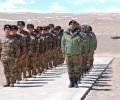
The talks till now have resulted in the resolution of issues in North and South Bank of Pangong Tso, Galwan and Gogra Hot Spring areas.
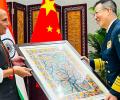
Defence Minister Rajnath Singh, in his meeting with Chinese counterpart Dong Jun in Qingdao on June 26, proposed that India and China should solve the "complex issues" under a structured roadmap comprising steps to de-escalate tensions along the frontiers and rejuvenate the existing mechanism to demarcate the borders.

India and China have reached new common understandings agreeing to conduct normalised management and control of the boundary during Foreign Minister Wang Yi's visit to New Delhi, Beijing said.
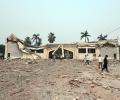
'We won not (only) because we were able to carry out long-range precision strikes.' 'That is, of course, one of the reasons but we had better situational awareness about what's happening than Pakistan.'
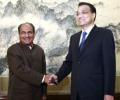
Committing to maintain peace and tranquility on the boundary, India and China on Saturday agreed that it was an "important guarantor for growth in ties and in this context pledged to early conclusion of negotiations on a proposed pact aimed at avoiding flare-ups on the border.

India and China have held their first diplomatic talks since withdrawing troops from two face-off points in eastern Ladakh, reflecting on the lessons learned from the border row to prevent future incidents. The two sides agreed to maintain peace and tranquillity in border areas, prepare for the next meeting of Special Representatives on the boundary question, and highlighted the importance of regular exchanges and contacts at diplomatic and military levels. The talks come after the completion of the disengagement process from the last two friction points, following an agreement finalized in October 2022.
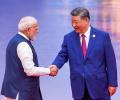
Prime Minister Narendra Modi and Chinese President Xi Jinping held talks focusing on rebuilding bilateral relations, emphasizing border peace and addressing cross-border terrorism.
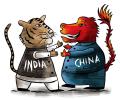
India and China have announced a series of measures aimed at improving their relationship, including maintaining peace along the border, reopening border trade, and resuming direct flights.
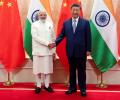
Prime Minister Narendra Modi and Chinese President Xi Jinping vowed to work towards a "fair, reasonable, and mutually acceptable" resolution of the festering boundary issue and pledged to work towards stabilising global trade.

The virtual talks took place under the framework of Working Mechanism for Consultation and Coordination on India-China Border Affairs.

India and China on Wednesday held 'constructive' and 'forward-looking' diplomatic talks to resolve the over four-year border standoff along the Line of Actual Control (LAC) in eastern Ladakh but there was clear no indication of any breakthrough.
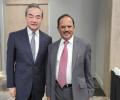
Doval is in Beijing for the 23rd round of the Special Representatives' talks being held after a gap of five years.
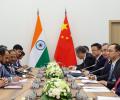
According to informed sources, Doval will arrive in Beijing on Tuesday to attend the crucial talks, which were expected to provide a way forward for the two countries to normalise the relations.

Chinese Foreign Minister Wang Yi has expressed readiness to join hands with India's National Security Advisor Ajit Doval to "properly handle" issues related to the situation on the ground in the border areas, amid the protracted border row in eastern Ladakh.

The key meeting was held in Beijing on March 27, the MEA said in a statement.

The MEA said the two sides shared their perspectives on the matter in the talks held in a friendly and cordial atmosphere.

'Our brave Indian soldiers don't reply to raining of bricks with mere sticks, they do so with iron rods'

The former Army Chief said India's relations with China will always remain "somewhat tense".

As China frowned on Dalai Lama's visit to Tawang in Arunachal Pradesh, India on Monday said border differences between the two countries could be resolved through dialogue.

India and China will resume direct flight services by the end of this month after a five-year gap, signaling an effort to rebuild ties strained by the border standoff in eastern Ladakh.

'Nehru was an idealist, he was certainly a visionary in one way, but Mao Zedong was not. Mao Zedong was a very down-to-earth strategist. He wanted to take Tibet, to take the plateau, to take the rivers, to take the minerals.'

'After the Galwan clash, the rules of engagement changed with the army commanders allowed to use any means at their disposal as they deem fit for tactical operations.'
